
Best Non-Slip Bathroom Mats for Seniors: What Actually Prevents Tile Slips
Prevent bathroom slips with the right mat setup. Learn what features matter, where to place mats, what to avoid, and how to make tile safer for seniors.
David George
2/16/20263 min read
Best Non-Slip Bathroom Mats for Seniors: What Actually Prevents Tile Slips
A bathroom slip rarely feels predictable. It’s not a slow-motion movie scene. It’s a quick moment—one wet foot landing on tile, a tiny shift, and suddenly your body is trying to catch up. The scary part isn’t just the fall. It’s the realization that the bathroom can turn ordinary routines into risk.
The right mat setup can dramatically reduce that risk—but here’s the truth: not all mats are safe, and placement matters just as much as the product. If the mat slides, bunches, or curls at the corners, it can cause the exact fall it’s supposed to prevent.
👉 Start here first: Bathroom Safety for Seniors (Complete Guide) → /bathroom-safety-for-seniors/
The truth about mats: fewer is often safer
A common mistake is scattering multiple mats around the bathroom. It feels like “more protection,” but it can create raised edges, bunching, and trip points—especially if the mats shift after cleaning.
A safer approach is usually:
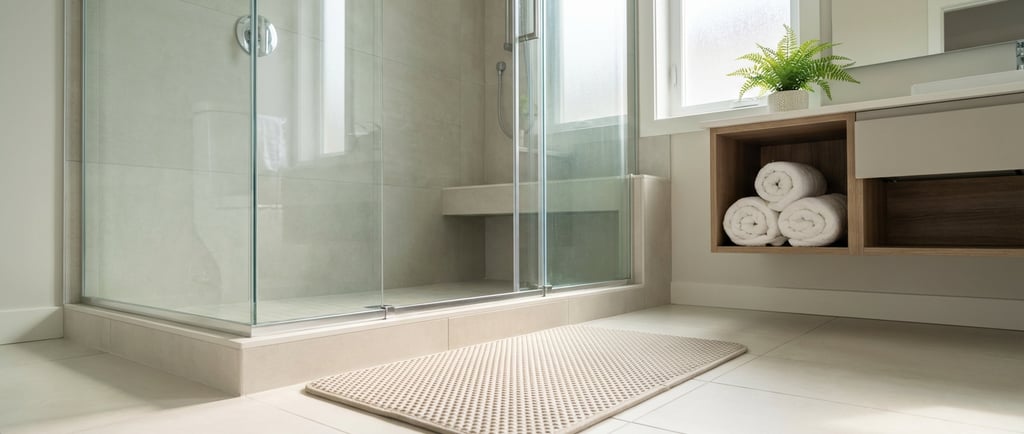
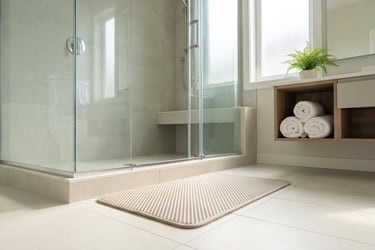
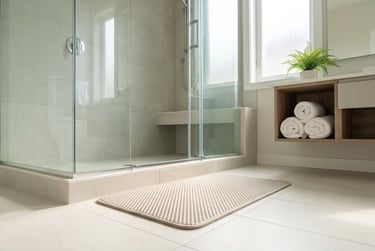
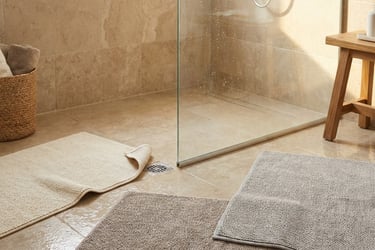
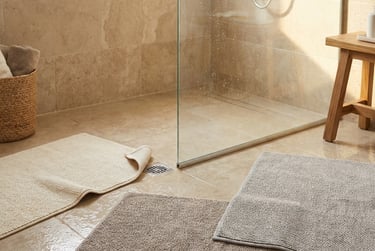
One reliable mat outside the shower/tub where feet land first
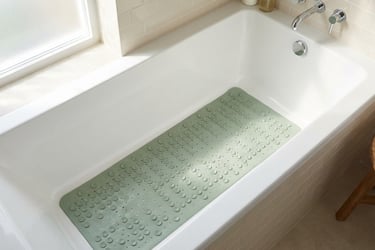
One non-slip surface inside the tub/shower (mat or strips) if needed
Simple. Consistent. Predictable.
Where to place a bathroom mat (the “landing zone” rule)
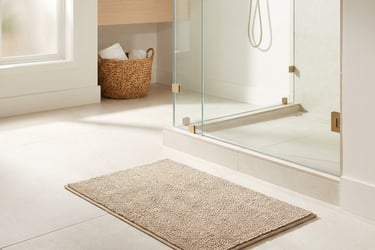
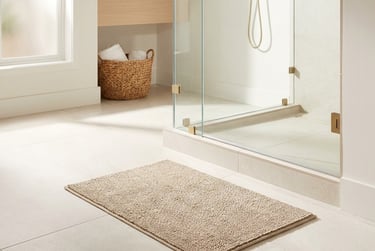
The most important spot is where you step out of the shower or tub.
If you watch someone exit the shower, it often goes like this:
they step out
they shift weight
they turn
they reach for a towel
That’s the “wobble window.” Your mat should be placed where that first step lands and where turning usually happens—not “somewhere nearby.”
Quick check: If you step out and your foot lands partly on mat and partly on tile, move the mat. That half-and-half landing is a common slip trigger.
What features actually matter (and what’s mostly marketing)
When choosing a mat, focus on real-world safety:
1) It must not move
If a mat slides even a little, it can cause a fall.
Look for:
strong non-slip backing
weight and grip that holds to tile/vinyl
edges that lie flat
2) It must lie flat (no curled edges)
Curled corners are trip hazards. If you keep “fixing” the corners with your foot, the mat is not doing its job.
3) It must dry well
A mat that stays wet can become slippery on top—or it gets removed because it smells musty. When the mat disappears, so does the protection.
4) It must be easy to clean
Soap film and residue are sneaky. Over time, they reduce traction on tile and sometimes on mats too.
The biggest hidden cause of tile slips: soap film
Tile can become slippery from a thin layer of soap residue that builds up gradually. People often think, “The floor looks clean,” but traction changes slowly over time—until one day you notice it the hard way.
A quick weekly clean of the shower/tub floor and the mat area often improves safety more than people expect.
What to avoid (this is where most people go wrong)
Try to avoid:
loose throw rugs with no grip
rugs that slide when you push them with your foot
thick, fluffy mats that bunch or fold
multiple small mats that create edges and gaps
anything that encourages you to “step around it” instead of onto it
If you ever catch yourself thinking, “I just have to be careful,” that’s usually a sign the setup needs improvement.
A simple 30-second safety test
Before you trust any mat:
place it where you want it
push it firmly with your foot
if it shifts, slides, or wrinkles → it’s not safe enough for the landing zone
That test prevents a lot of problems.
Related Bathroom Safety Guides
Affiliate disclosure : Some links on this page may be affiliate links. If you purchase through them, I may earn a small commission at no extra cost to you.
Help
Questions about senior health? Reach out.
Contact
Subscribe
Contact@gyguru.com
© 2025. All rights reserved.